

Second Grade Unit 4 Exhibit Night 2026
Thursday, May 14th
BENNETT 5:00–5:30p | GRINDE 5:45–6:15p | EISEL-ELDER 6:30–7:00p
Students blasted off this unit, exploring space science and forces on our earth! Take a peek through their travel journals and look at the photos from our expeditions. Don’t miss our Out of this World Self-Portraits and mixed media interactive art piece.
Back on Earth, second graders examined force and motion, learning about Isaac Newton and his 3 laws of motion. Students made classtime feel like recess, experimenting with the forces of inertia, gravity, friction, and more! Ask your Explorer to explain how they used all 3 laws of motion to create a rocket propelled by a chemical reaction!
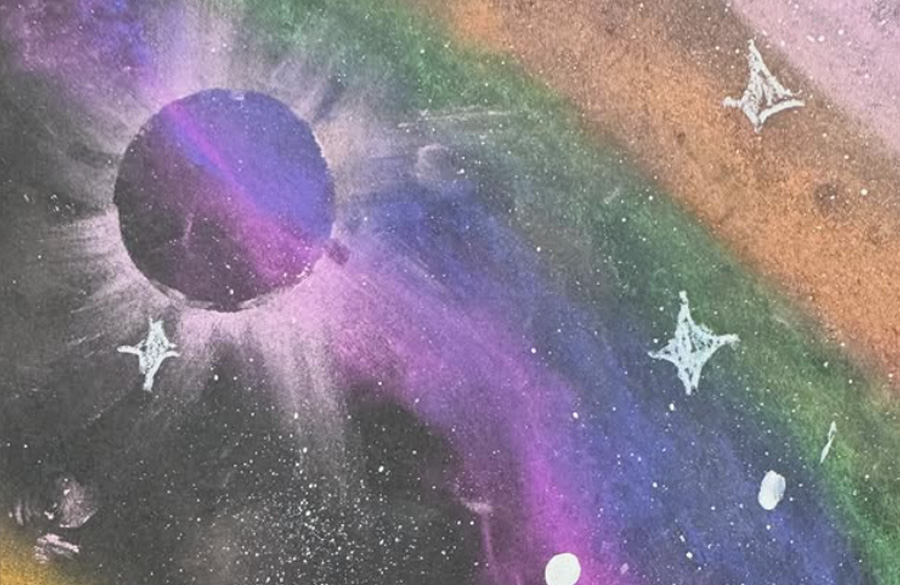
Student Expeditions:
- Bradley Observatory
- Lauren Sgro “Astonomy Talk”
- Fernbank Museum of Natural History “Fantastic Forces”
- Fernbank Science Center “Earth, Moon, and Sun”
- Sparkles Gwinnett “Force & Motion”
Ask an Explorer:
- Why does the moon look a little different each night?
- What causes the changes in seasons we experience?
- What is one of Newton’s laws of motion?
- Can you explain what friction is? Gravity? Inertia?
To the Moon and Back
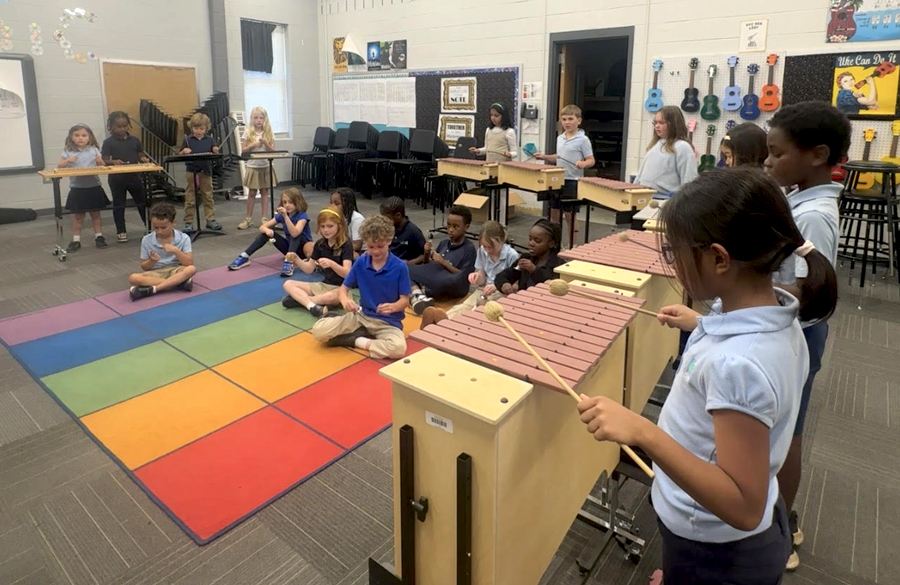
Students made connections between Art, Music, and STEM for an immersive experience into a large-scale art piece, To the Moon and Back. They created the art, added music and sound effects. The large-scale interactive art piece uses Makey-Makey and Scratch coding, along with conductive tape that students use to complete a circuit and allow the sounds to play, kinda like pushing a button on a computer!
Out of this World Self-Portraits
In Art, students created a Mixed Media Self-Portrait inspired by NASA Astronaut Ricky Arnold, who took an out-of-this-world “space-selfie” during a spacewalk on June 14, 2018. Students learned how to blend chalk pastels, creating beautiful nebula backgrounds, and added space-themed details. Ask your Artist about the extra details they added into their space suit!
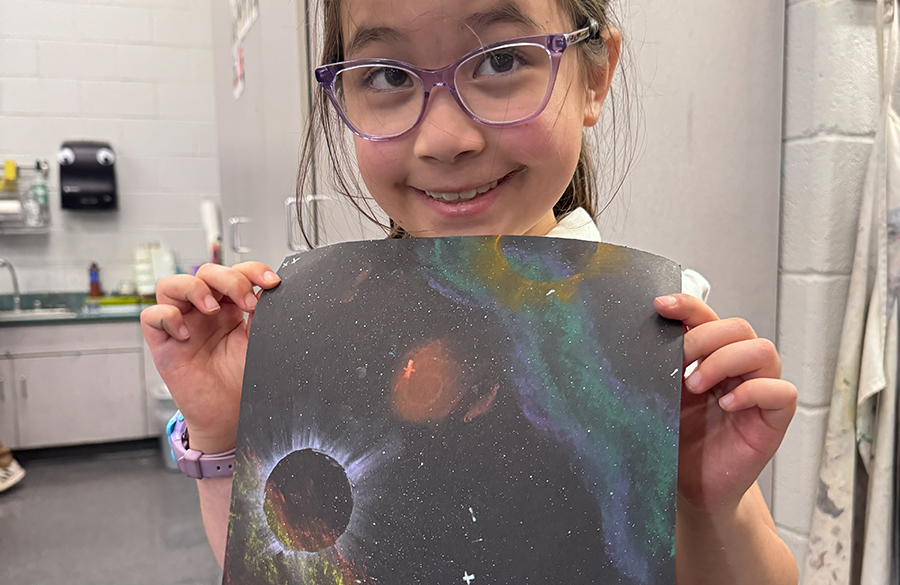
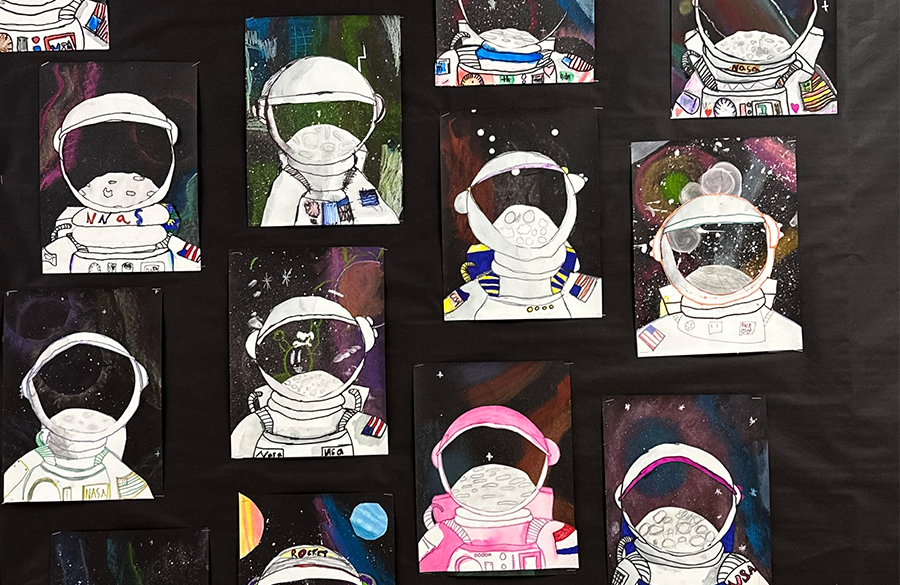
There are stars in my self-portrait, just like how we learned about different galaxies and stuff that happens in space.
– Aster Ellis-Hontz
Writing… in Spaaaaaace!
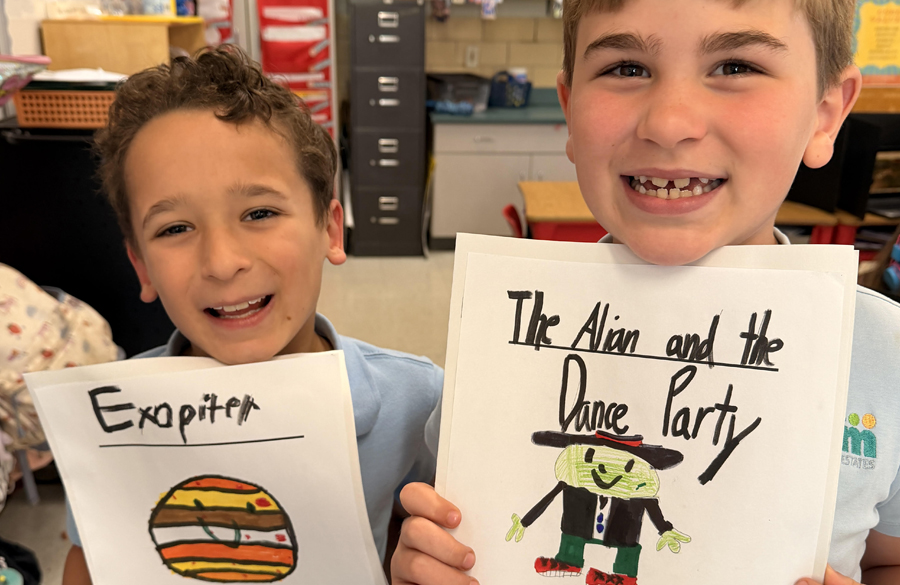
Students flexed their creativity muscles applying what they learned about stars, the moon, the seasons, and even reviewed some topics from quarter 2! Peruse their writing–students chose either a chapbook of poetry or a Cinderella story set in space to display. As always, students created travel journals to show their learning throughout the unit. Check out the covers–based on the latest NASA mission, Artemis II’s photo of “Earth Set”! Ask your Explorer how they used their knowledge of the moon to make their cover artwork.
I wrote a poem about stars. I wrote another poem about the galaxy and space. I’m really excited because I have never written a poem in my life!
– Christena Wright
Ceramic Moon Stations
In Art, students created textured ceramic moons. We started with a clay slab. Next, we added craters by pressing into the clay with marbles and small stones. The small size and shape of the sculpture can be used to provide a safe, shallow hydration station for pollinators like bees and butterflies, who can easily drown in deep water. Once you find your student’s moon, please place it on the yellow Museum in a Box speaker. Listen to how your Explorer connected what they learned about the moon to this beautiful ceramic piece!
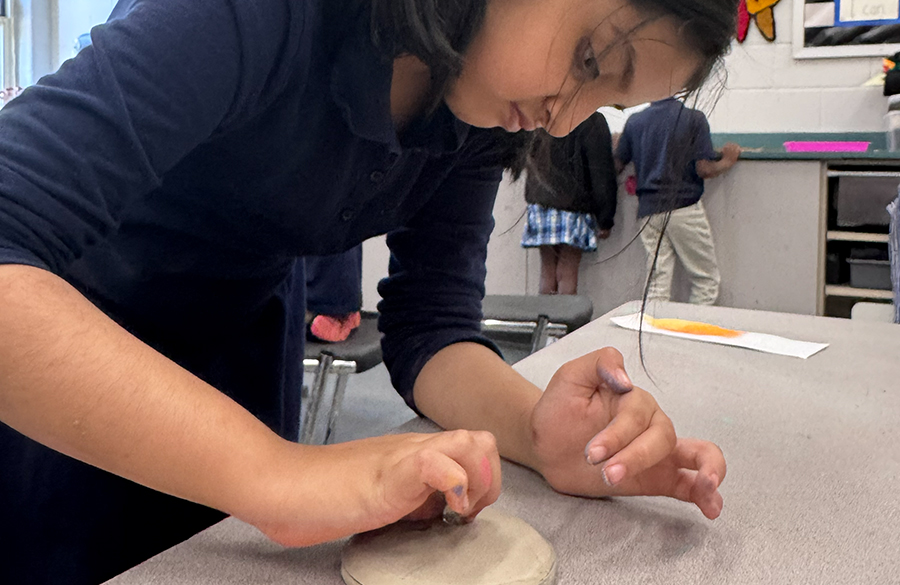
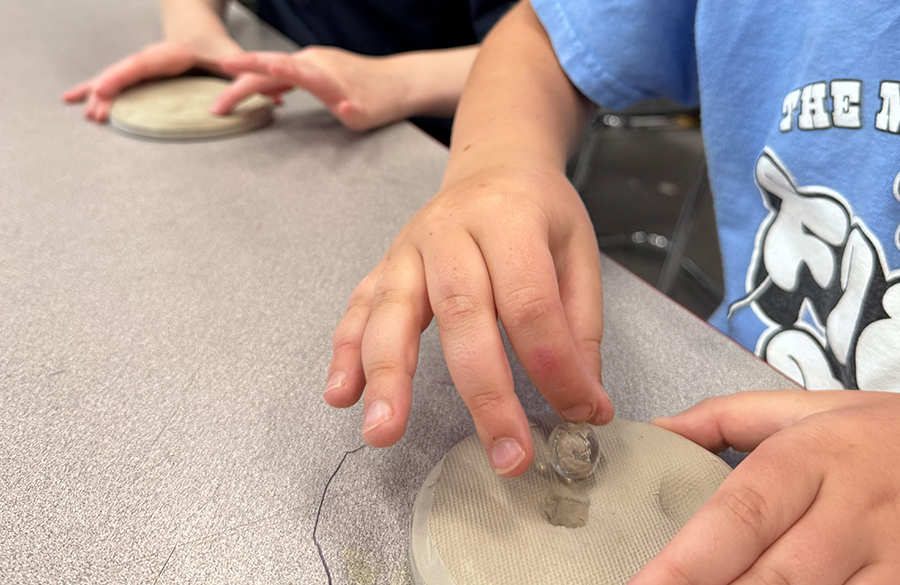
We made it so pollinators can drink instead of drowning. They could drink from bigger bowls, but bees can drown if there was a big bowl because they’re little, so that’s why we made them so little.
– Amelia Whitman