

Fifth Grade Unit 4 Exhibit Night 2026
Wednesday, May 13th
HATCH + PHELPS (A–L) 5:00–5:45p | ALL 5:50–6:10p Oral History Projects Film Festival (Cafeteria) | TEJANI + PHELPS (M–Z) 6:15–7:00p
Student Expeditions
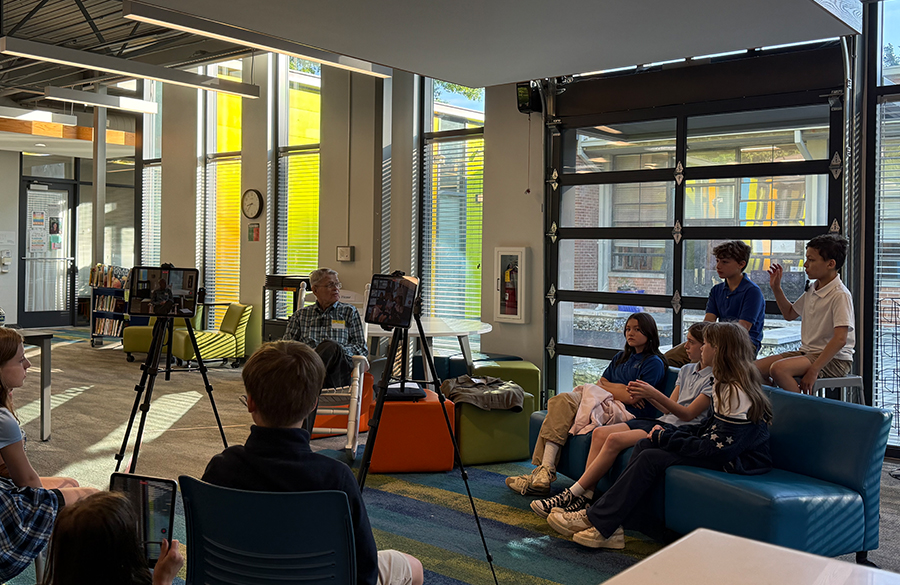
- Oral History Interviews: Korean War Veteran, Holocaust Survivor Family Member, 9/11 Survivor, Civil Rights Activist
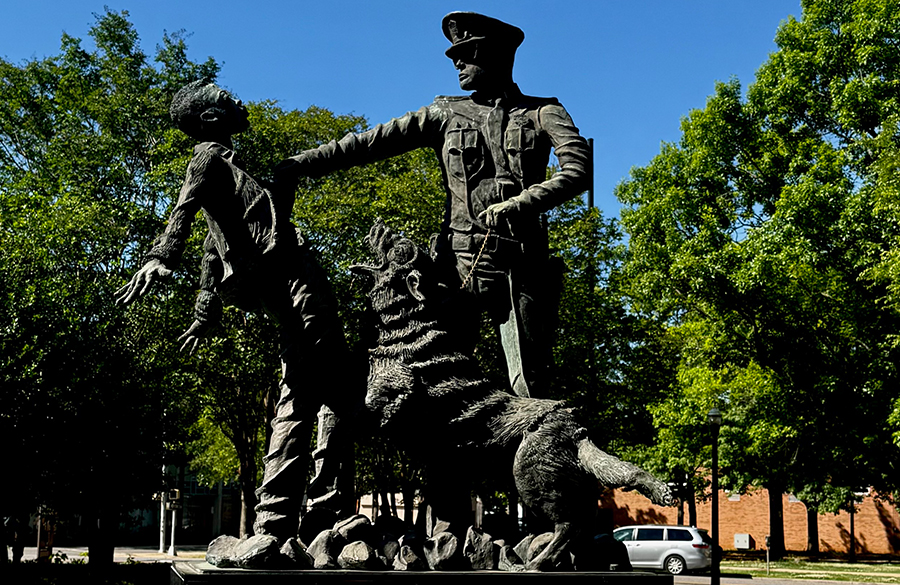
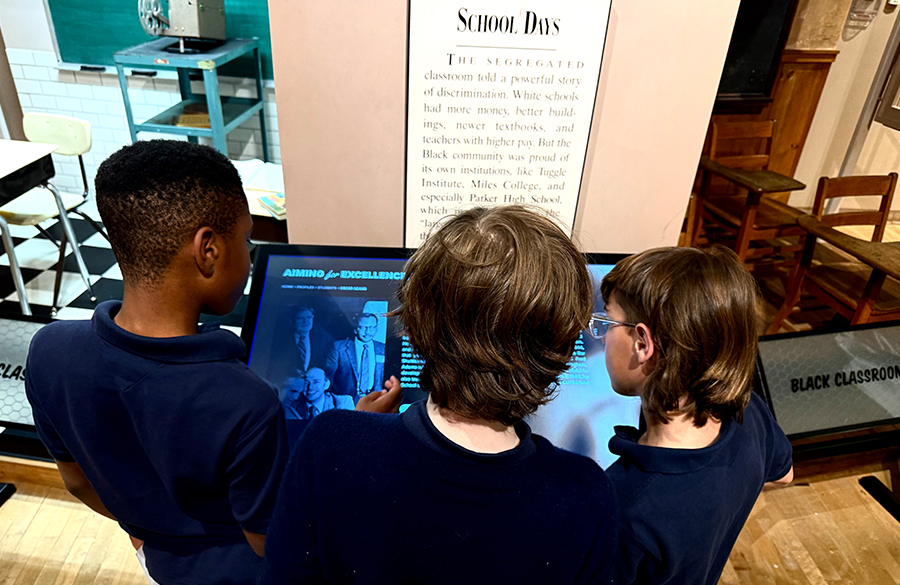
- Birmingham, AL “Civil Rights Tour”
- Camp Fortson
Ask an Explorer:
- What event or person did you choose to highlight in your narrative story?
- Did reading Walk Two Moons change your perspective about others?
- What did you learn on the Expedition to Birmingham?
- Who were the Navajo Code Talkers?
- Are you excited for or nervous about Middle School?
Expedition Reflection
This display highlights our learning after we have returned from powerful learning expeditions throughout the quarter. From our visit to Birmingham, where we studied the Civil Rights Movement, to our Holocaust butterfly project focused on remembrance and resilience, students have experienced history beyond the classroom. As you look through these reflections, you will see how students processed what they saw, heard, and felt, and how they connected these experiences to larger ideas about justice, empathy, and human responsibility.
Before this quarter, I thought World War 2 was just battles and soldiers, but learning about the Holocaust made me realize how dangerous hate can become if people stay silent.
– Zoe Barron
Voices of History: An Oral History Project
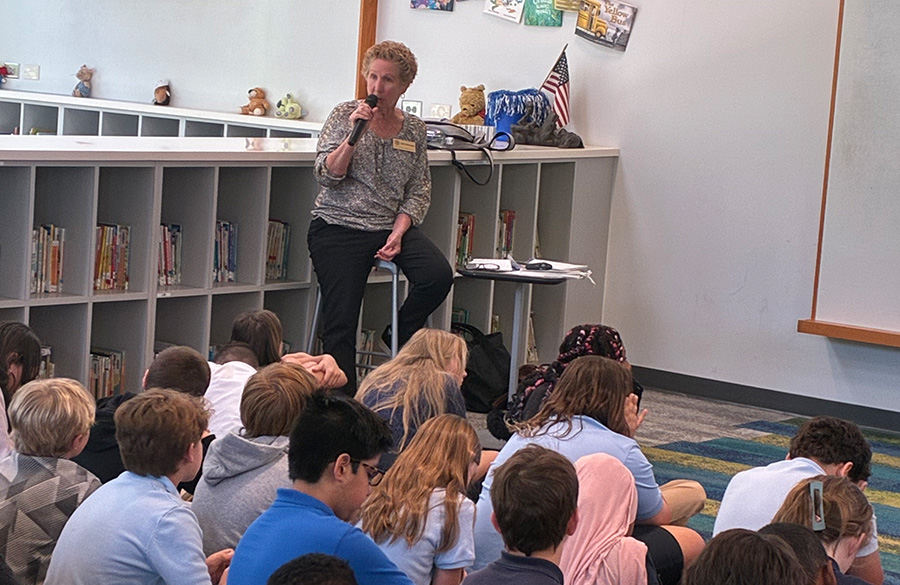
Oral History Film Festival
- Preview Video – Voices of the Past: An Oral History Project
- Video 1 – Interview with Judy Schancupp, family member of Itka Zygmuntowicz, Holocaust survivor
- Video 2 – Interview with Willard Hurst, Korean War veteran
- Video 3 – Interview with Michael Bond, Atlanta City Councilman & son of Civil Rights Activist Julian Bond
- Video 4 – Interview with Lt. Col. Brick Eisel, Pentagon 9/11 Survivor
This exhibit shares the work of 5th grade students who explored history through the voices of those who lived it. Throughout this project, students studied major historical events. They researched these events to understand their causes and impact, then prepared thoughtful questions to guide interviews with individuals who experienced these moments in history firsthand. Using these interviews, students transformed real-life accounts into narrative stories. Their work highlights not only historical facts, but also the emotions, challenges, and resilience of the people behind those events. Each piece in this exhibit represents a student effort to listen carefully, ask meaningful questions, and honor someone’s story with accuracy and respect. This project reminds us that history is more than dates and textbooks—it is made up of real people and real experiences. By preserving these voices, students help ensure that these stories are remembered and learned from for generations to come.
Don’t Judge a Book By its Cover
In Walk Two Moons, readers quickly learn that first impressions can be misleading. At the beginning of the story, characters like Sal and Phoebe seem easy to understand, but as the story unfolds, we discover deeper emotions, hidden struggles, and important truths about their lives. This connects to the idea of not judging a book by its cover—both in literature and in real life. Just like Sal learns to understand others by “walking two moons in their moccasins,” we are reminded to look beyond appearances and take the time to truly understand people’s stories.
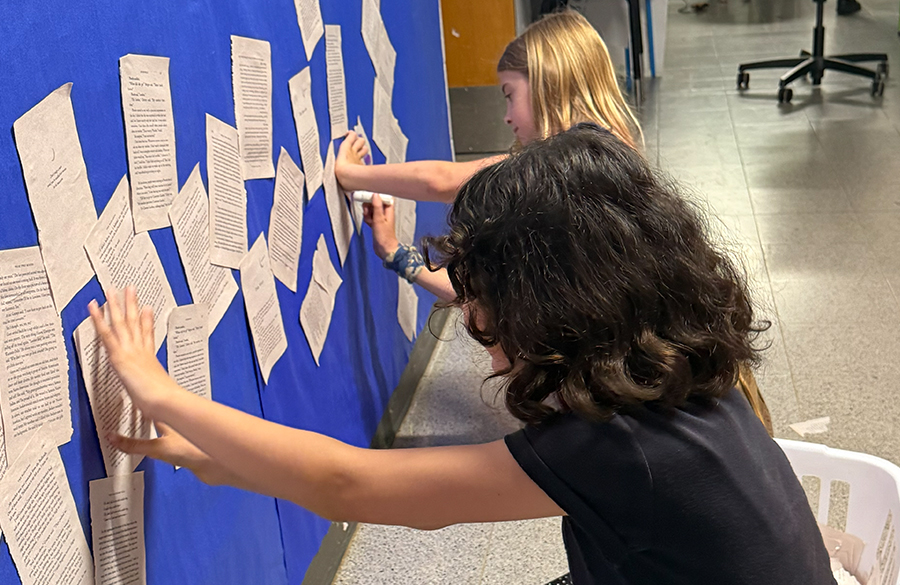
Learning Wall
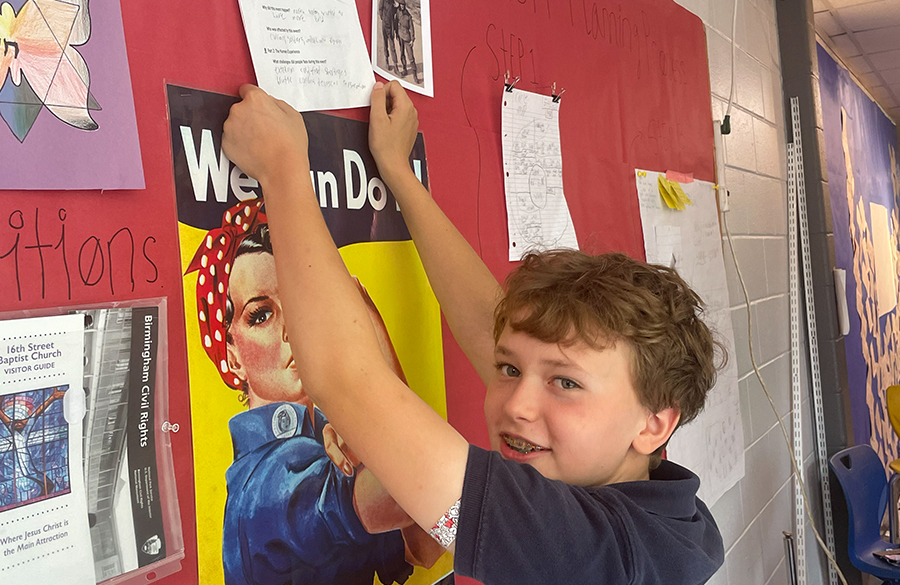
This display represents the ongoing process of learning throughout the quarter. Rather than focusing only on final answers, this Learning Wall highlights how our thinking has grown over time—through questions, drafts, revisions, discussions, and new understandings. As you move through the wall, you will see evidence of how students built knowledge step by step across reading, writing, social studies, and math. This space reminds us that learning is not a single moment, but a process of curiosity, effort, reflection, and growth.
On the Birmingham trip, I enjoyed walking around Kelly Ingraham Park. We saw several meaningful statues. The statues were historical and fascinating at the same time, so it was cool to walk around because it was like an outdoor museum.
– Zane Robison
Mission WWII: Navigate & Decode
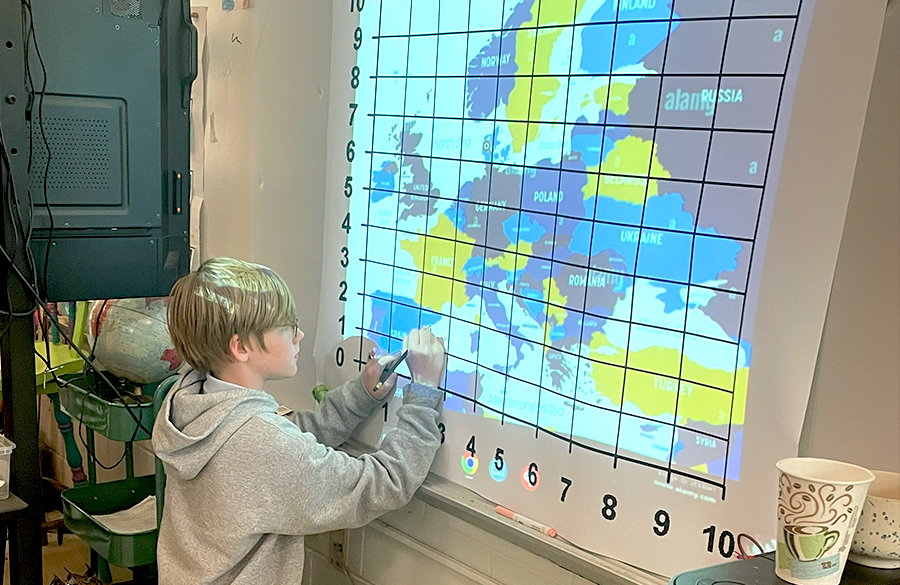
This display combines math and history as students work through a coordinate plane grid inspired by wartime strategy and communication. Each homeroom has its own mission space where students use coordinate skills to navigate the grid, decode hidden messages, and solve challenges connected to the Battle of Iwo Jima and the work of the Navajo Code Talkers. Just as code talkers used language to transmit critical information during World War II, students must carefully plot points and interpret coordinates to complete their mission. This experience shows how math can be a powerful tool for problem-solving, strategy, and communication in real-world and historical contexts.
Coordinate planes are similar to maps because they use perpendicular lines to create a grid, allowing us to pinpoint, navigate, or track objects by giving directions from a starting point.
– Olivia Uddin
Travel Journals
This display showcases student travel journals from our quarter-long journey through modern history. As we explore key events from World War II, the rise of modern technology, and the events and impact of September 11th, students are documenting their thinking, questions, and connections along the way. These journals reflect how history is not just a series of events, but a story of change, innovation, and human experience that continues to shape our world today.
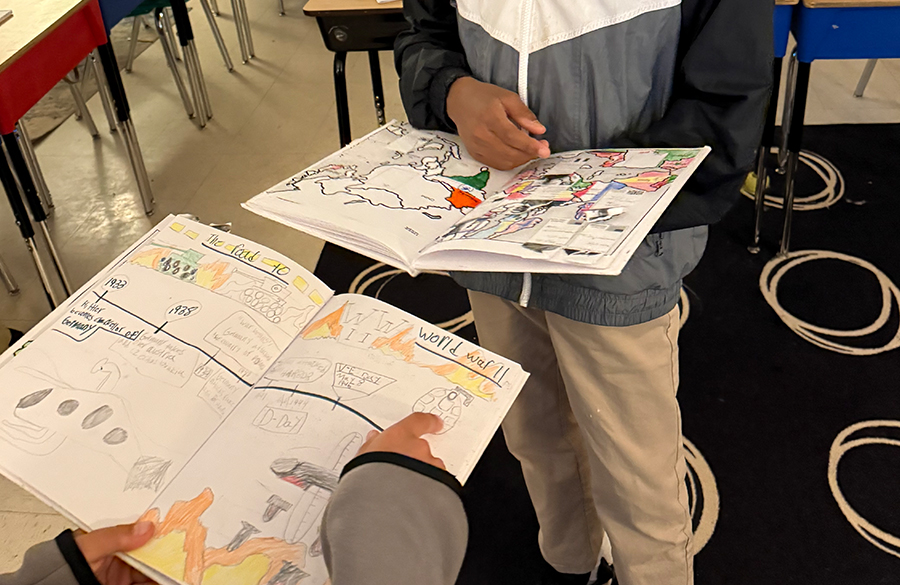
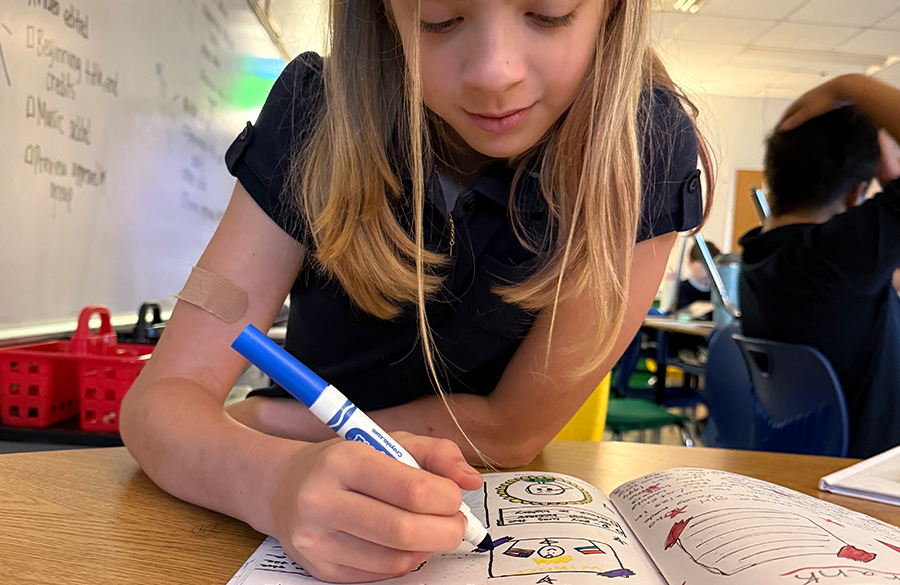
The page I’m most proud of in my travel journal is my V-J Day page because of my TIDE paragraph and my drawing.
– Najma Khayre