
Unit 4 Exhibit Night 2026
Wednesday, May 13th
BRITTIAN + GONZALEZ 5:00–5:45p | EARNEST + ROCHESTER 6:00–6:45p
Student Expeditions:
- MODA “Biomimicry Design Challenge”
- Arabia Mountain
- AWARE
- Chattahoochee Nature “The Advanced Web of LIfe & Nature’s Recyclers”
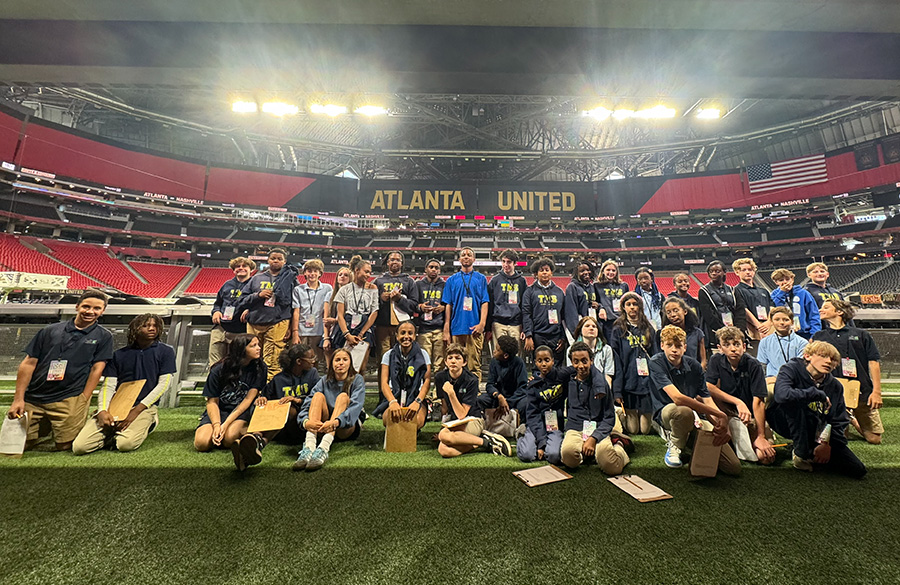
- Mercedes Benz Stadium STEAM Tours “Survey Says”
- 7th Grade to APEX Museum “Africa: The Untold Stories”
- Zoo Atlanta “Wild Walk”
- Six Flags
- Game Show Battle Room
TED Talks: We are all Connected
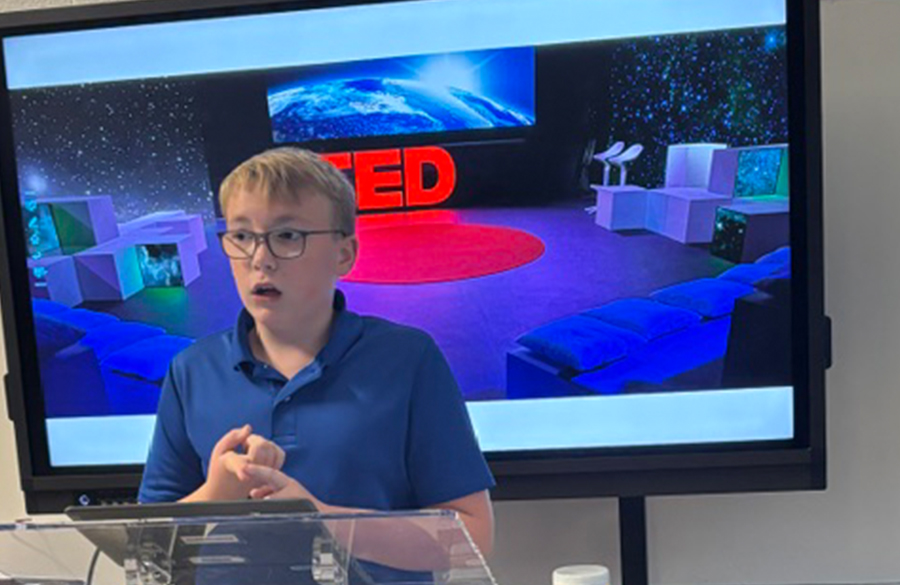
Students have learned about many topics related to Africa, including historical conflict and colonialism, independence movements, apartheid in South Africa, environmental issues and change, culture and diversity, government stability and quality of life, and economic growth and development. They developed a TED Talk that blends personal storytelling, research, and a call to action. Please join us in our classroom to listen to our TED Talks.
World Studies: Scramble for Africa
In World Studies, students have learned about the geography of Africa, ethnic groups, European colonization of Africa, and the lasting impact of the exploitation of Africa’s land and people. We have explored the system of apartheid in South Africa and Nelson Mandela. Students created a political cartoon depicting the reasons and/or effects of European colonization in Africa.
Ask an Explorer:
- Why did European countries colonize Africa?
- What are some of the lasting effects from colonization?
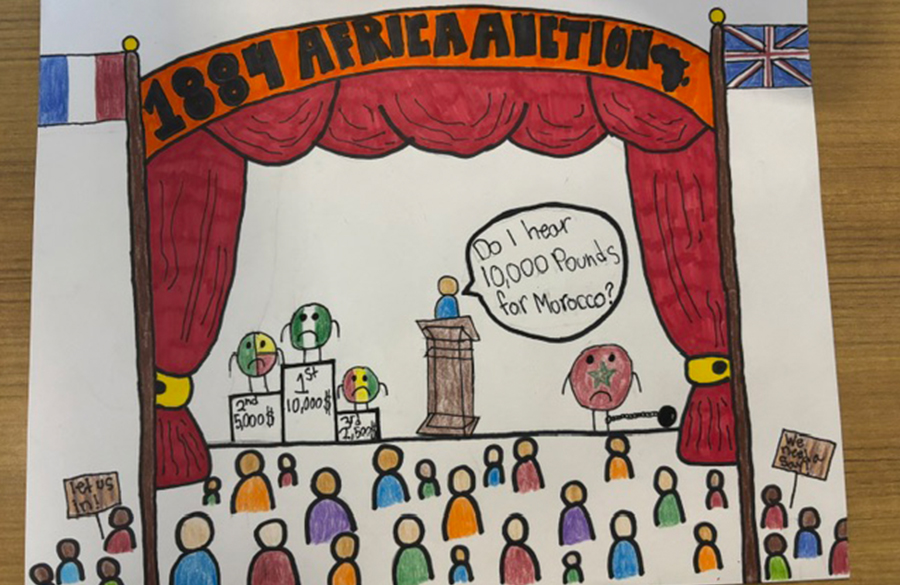
No country wanted to be without a colony because it was a sign of being weak. This, in turn, caused many countries to rush to Africa to gain a colony. This led to many resources being exploited and European countries becoming rich.
– Callan Stabler
“We’re All Connected” Narratives
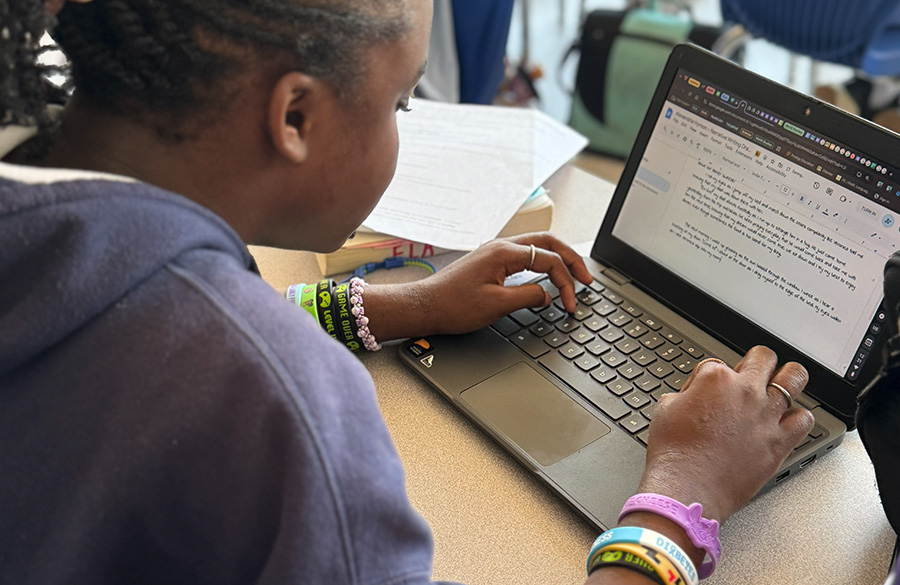
7th Grade ELA students used the novel Invisible Son by Kim Johnson as inspiration to write their own narratives. As they read, students thought like both readers and writers, building understanding and practicing literary techniques while studying how the author develops characters, plot, and setting.
Using the Invisible Son text to facilitate conversations, students explored the theme of connection by discussing important topics such as stereotypes, racial inequality, the juvenile justice system, and classism. These conversations helped students think deeply about how prejudice and trauma can affect Black youth in America.
Students then used these ideas to create their own stories, focusing on meaningful conflicts that show how stereotypes shape people’s experiences. After completing the POWER writing process, students reflected on how their plot, characters, and setting work together to tell a powerful story. Students then design a creative artifact to display, chosen by reflecting on their published piece to showcase their understanding of either character, setting, or plot.
Ecology Around the World
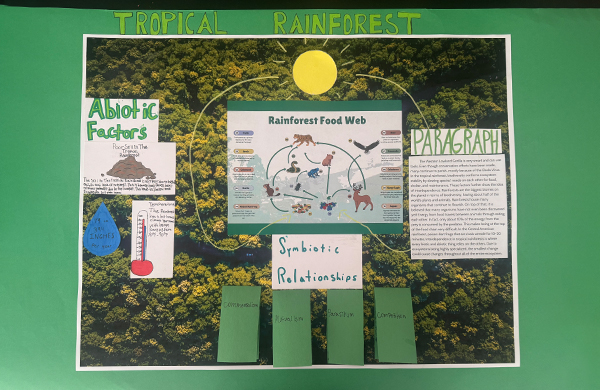
This quarter, students have been studying how organisms interact with each other and with their environment. Students researched ecological relationships in a specific biome and created a product to demonstrate their knowledge. Major concepts include: trophic levels, energy transfer, symbiotic relationships, abiotic factors, and plant and animal adaptations.
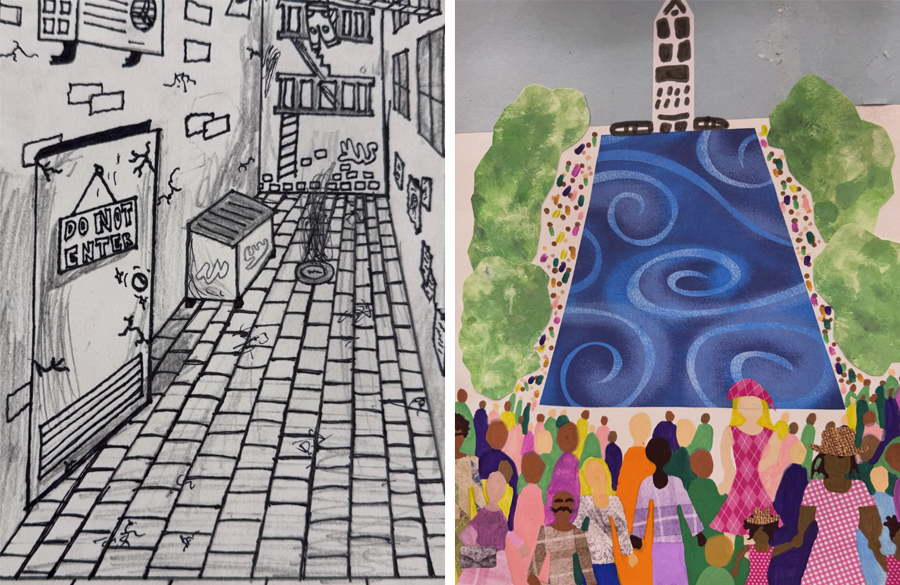
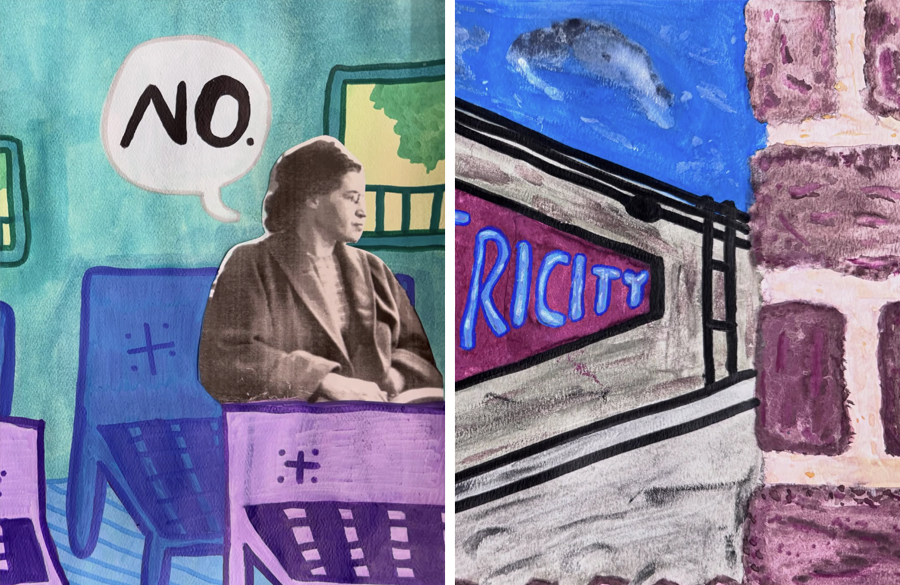
One-Point Perspective Studies
In Art, students were given a choice to create art using One-Point Perspective in response to subjects in their core classes. After mastering the techniques they needed to create visual space, the students each took inspiration from their unit lessons to show a unique perspective of their own – some as characters, first-person view, or even as animals and insects! Ask your artist how they chose the subject for their project.